
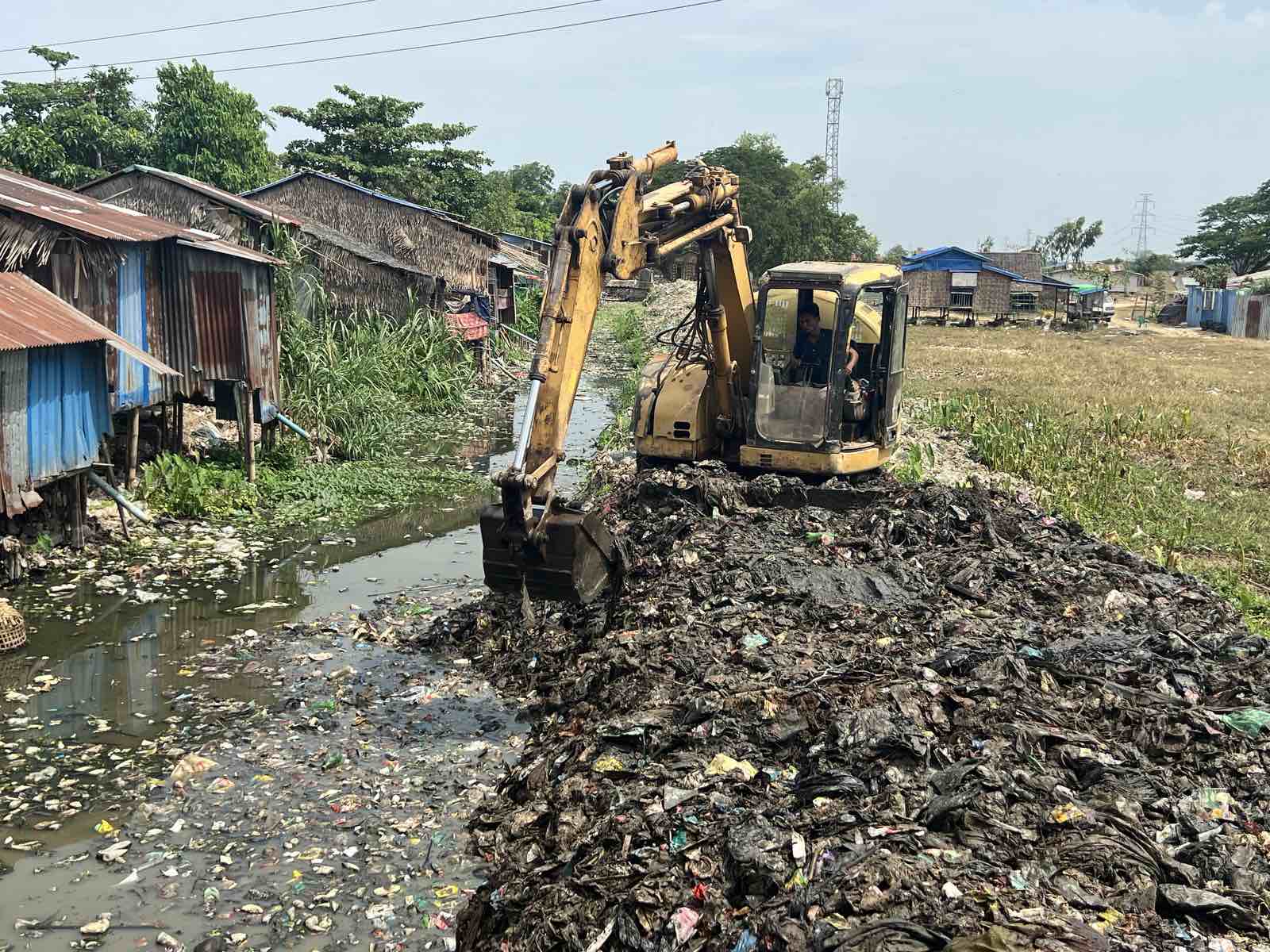
Every rainy season, families in Nat Sin Kone and Thae Phyu Chaung villages faced the same challenge: flooded roads, stagnant water, and unsafe conditions caused by blocked drainage channels. For children, this often meant walking through contaminated water to reach school. For families and small businesses, it meant disruptions to daily life and increased health risks.
Working through their Community Development Committee, residents led efforts to clear waste, remove sediment, and rehabilitate key drainage channels. With support from UNDP Myanmar and technical facilitation from FIN Myanmar, the community restored water flow and improved drainage across the villages.
Today, nearly 15,000 people are benefiting from reduced flood risks, cleaner surroundings, and safer access to schools, homes, and services. Community members have also established a maintenance group to help ensure these improvements are sustained over time.
This achievement is part of a broader integrated community development effort that FIN Myanmar has been supporting over the past three years. Through a combination of community-led planning, infrastructure improvements, livelihood support, environmental management, and local capacity strengthening, communities have been empowered to identify their priorities and take collective action to address them. The drainage rehabilitation reflects not only an investment in flood resilience, but also a longer-term commitment to building healthier, safer, and more sustainable communities where children and families can thrive.