
For many girls growing up in Myanmar, the first experience of menstruation can be confusing and even frightening. Conversations about periods are often avoided, leaving girls to rely on myths, incomplete information, or advice from friends. Many are unsure how to manage their periods safely, how to dispose of menstrual products properly, or how to cope with menstrual pain. For those who have not yet reached puberty, the uncertainty can be just as overwhelming.
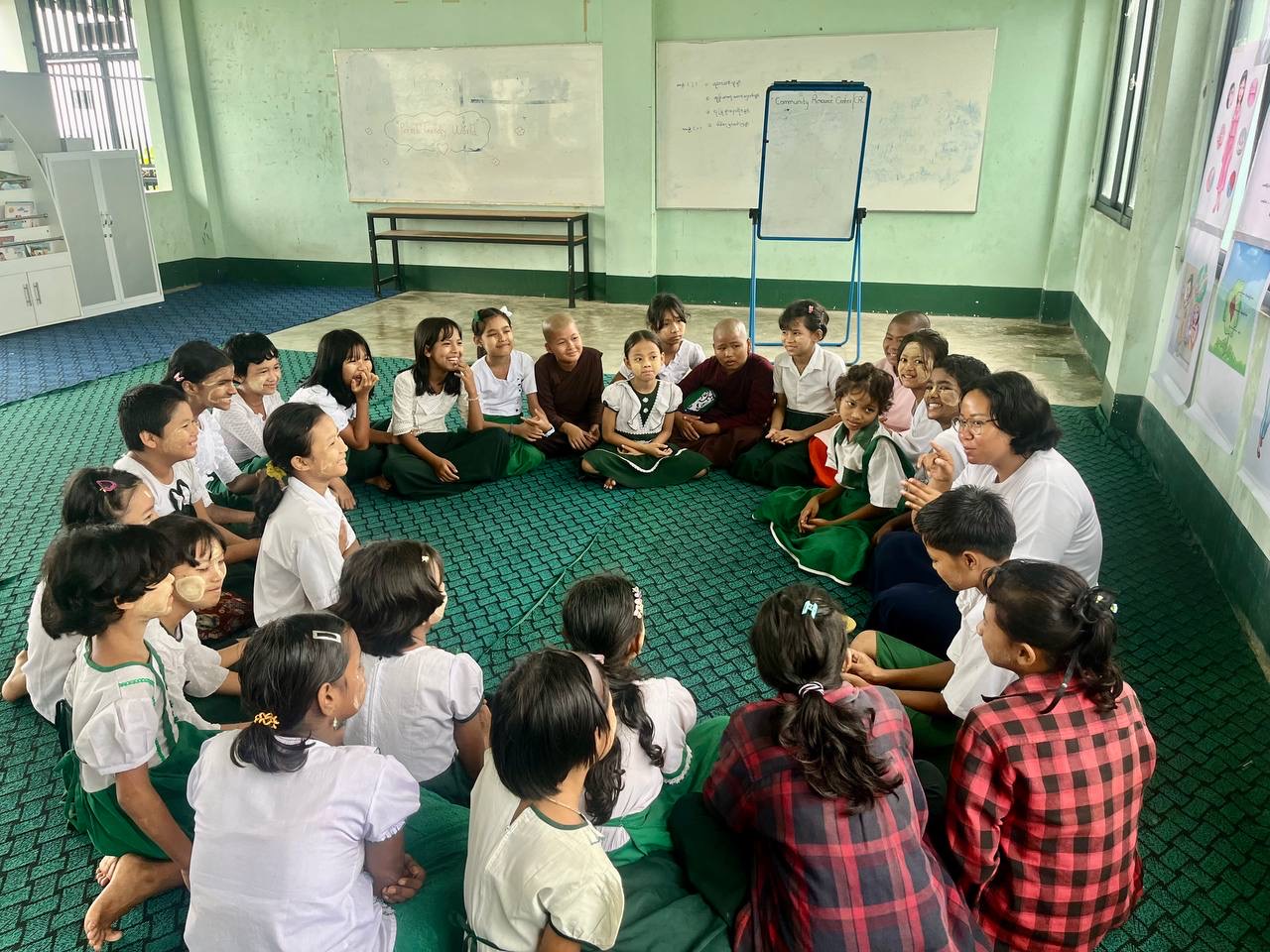
Every girl deserves to understand her body and experience menstruation with confidence rather than embarrassment. With this in mind, FIN Myanmar created a safe and welcoming space where girls could learn together, ask questions, and talk openly without fear of being judged.
Through four Menstrual Hygiene Management (MHM) awareness sessions at the Thanlyin Community Resource Centre (CRC), 98 girls aged 10–16 years from community school participated to topics such as puberty, the menstrual cycle, personal hygiene, healthy nutrition, and the safe use and disposal of menstrual products. The sessions were practical, interactive, and filled with honest conversations that encouraged curiosity and learning.
As the discussions were conducted to feel like talking to an older sister. The girls shared the realities they face every month. They save pocket money to buy menstrual products. Some spoke about feeling uncomfortable using the community public toilets because they lacked privacy. Others admitted that they usually threw used sanitary pads into toilets simply because they did not know a better way, there are no designated spaces. Several shared that they took painkillers from nearby pharmacies whenever menstrual cramps became difficult to manage, often without seeking advice from a health professional. These conversations highlighted not only the challenges girls face but also how powerful access to accurate information can be.
By the end of the sessions, questions that once felt too embarrassing to ask were discussed openly. Girls, who had not yet started menstruating, felt better prepared for the future, while others left with practical knowledge and greater confidence to care for their menstrual health.
Most importantly, the sessions helped replace silence with conversation, reminding every participant that menstruation is a normal part of life and that no girl should have to face it alone.